


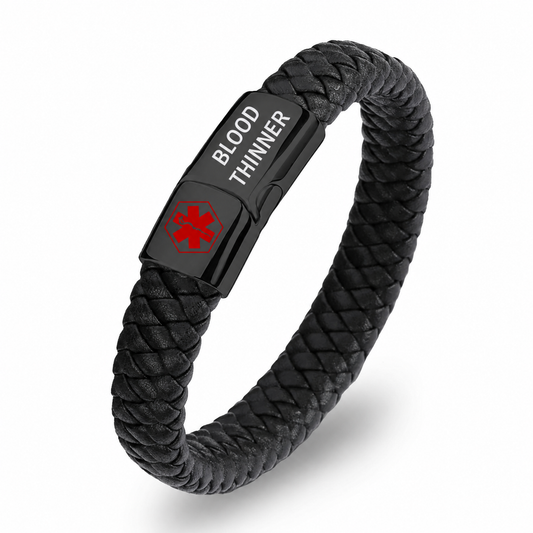


7 Reasons EMTs Quietly Buy This Medical Bracelet For Their Own Parents On Blood Thinners

When an older patient can't talk, most paramedics check one place first: the wrist. In one survey, 95% of responders said they look for a medical ID in an emergency.1
So when their own parents start blood thinners, many make sure one is on that wrist. If you take a blood thinner, here's why you should too.
A simple fall is a different emergency on blood thinners
adults over 65 fall every yearCDC data2
On a blood thinner, even a minor fall can turn serious. One Medicare study found 40% higher odds of a brain bleed in head-injury patients on warfarin.4
So the first thing responders need to know is:
Are you on a blood thinner?

You might not be able to tell them
minutes: the average wait for an ambulance in rural areas (about 7 minutes overall)JAMA Surgery5
The crew are strangers, and you may be confused or unconscious.
Your bracelet tells them what you can't. No passwords, no digging through your purse.

Your phone might not help
Phones can show medical info on the lock screen, but only if it's set up, charged and still working. A fall can crack the screen. The battery can die. Or the phone ends up in your bag or the car, out of reach.

And the alert card from your pharmacy? In a study of 22,624 patients on blood thinners, only 20% had it with them.7
95% of responders check the wrist.1 No passcode, no battery, nothing to remember.
Recommended by doctors
Hematologist Dr. Mark Crowther says a medical alert bracelet is “probably very useful” for older patients on several medications.8 Here's why it matters so much on a blood thinner.
Blood thinners slow down clotting. That protects you from dangerous clots, but it also means a bump to the head can keep bleeding inside the skull, where no one can see it.
You might feel fine at first. In older people on blood thinners, delayed brain bleeds usually show up within 48 hours, and sometimes later.3

That's why doctors tell people on blood thinners who fall or hit their head to call their doctor or 911, so they can check for bleeding in the brain.6 When responders know you're on a blood thinner, they know your head needs checking fast.
You'll get compliments on it
Most medical IDs look like hospital tags, so they end up in a drawer.
This one looks like a dainty bracelet you'd pick for yourself, in delicate silver or gold. The alert is engraved discreetly, so people notice a pretty bracelet, not a medical tag.

"Received my bracelet a few weeks ago & love it. Even have had others ask where I got it."
— Michele K., verified buyer
Built to be worn every day, for years
Plated bracelets can peel, tarnish and turn skin green over time. Then they end up in a drawer too. This one is made to stay on:
- Surgical-grade 316L stainless steel that won't rust or tarnish
- Shower-safe and sweat-proof, so you never have to take it off
- Nickel-free and hypoallergenic for sensitive skin
- 1-year no-questions-asked guarantee: refund or replacement if anything goes wrong

It's peace of mind for the whole family
Your family can't be with you every minute. But they can rest easier knowing whoever is there will see the one thing that matters.

Many women buy two: one for themselves and one for a sister or friend on the same medication.
Get yours today
The more family members you protect, the more you save.
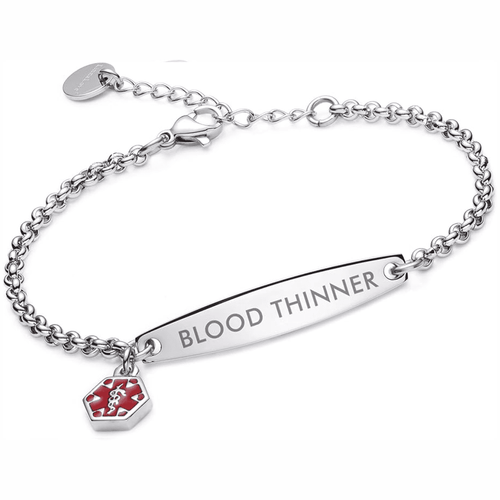
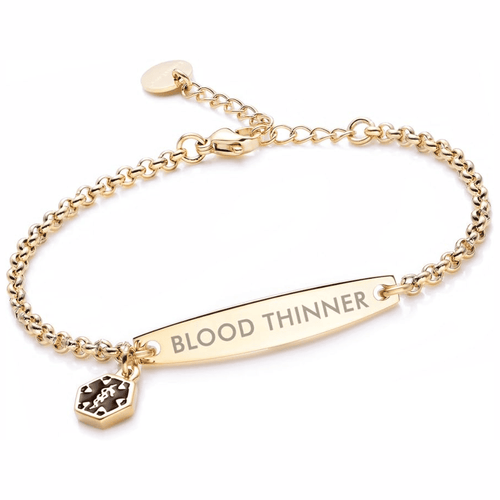
- Free emergency ID card in every bundle
- Free premium storage case, ready to gift
- Free worldwide shipping
Love it or your money back. If you're not happy for any reason within a year, you get a refund or replacement. No questions asked.
Each bracelet is engraved before shipping and arrives in about 10 days.
What women are saying
"I've been on blood thinners for nearly 48 years, and this is the best bracelet I've ever bought."
"Beautiful quality and gives me peace of mind when I go out alone."
"Fits perfectly and looks lovely. I feel safer already knowing I have it on."
"I bought one for myself and one for my dad. Best decision ever."
Questions
I already have my info on my phone. Do I need this?
I have a wallet card. Isn't that enough?
Do paramedics really check bracelets?
Which blood thinners is it for?
How big is it?
Will it turn my skin green or irritate it?
Can I shower in it?
Can I get my name engraved?
Is it a good gift?
How long does shipping take?
What if I don't like it?
Make sure your wrist can speak for you
Free shipping · 1-year guarantee
Photo disclaimer: All photos of people on this page are illustrations created for demonstration purposes. The people shown are not real patients, EMTs, doctors or customers.
Sources
- American Medical ID survey of emergency professionals, via Lifeline
- CDC older adult falls data, via The Hospitalist
- Delayed intracranial hemorrhage in older adults on anticoagulants (News-Medical, 2024)
- Warfarin and head injury outcomes in Medicare beneficiaries (PubMed)
- EMS response times in rural, suburban and urban areas (JAMA Surgery, 2017)
- What you need to know about blood thinners (AARP)
- Patients' knowledge and use of anticoagulant alert cards (Int J Clin Pharm, 2020)
- Identification cards for patients on anticoagulation therapy, interview with Dr. Mark Crowther (McMaster Textbook of Internal Medicine)